
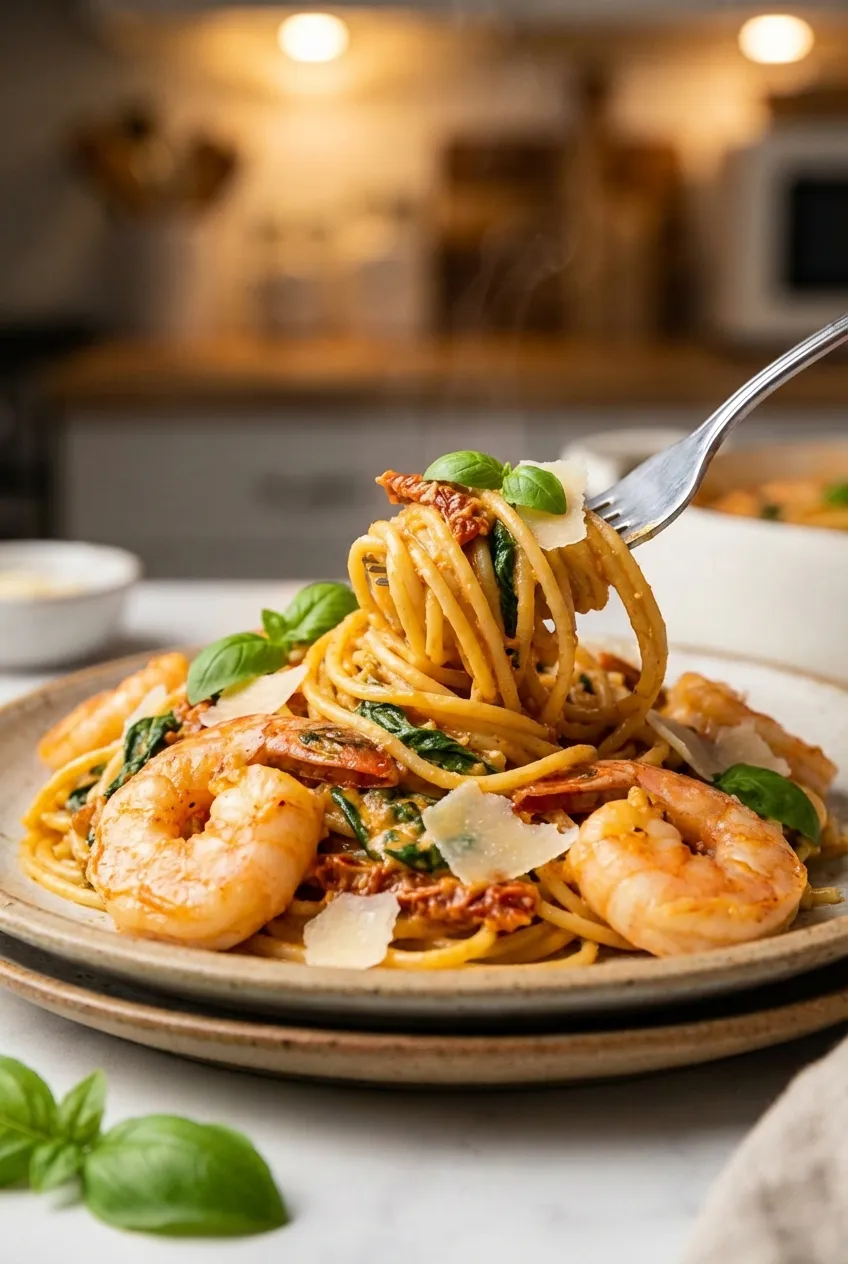
The Story Behind This Recipe
There is a stretch of coastline between Cascais and Estoril in Portugal where the restaurants line up shoulder to shoulder, each one promising the freshest seafood you have ever tasted. Growing up, my family spent lazy summer evenings at those restaurants, watching the fishing boats come in while my father ordered enormous platters of prawns and clams. The prawns were always the highlight — plump, sweet, pulled from the Atlantic that same morning, tossed in garlic and butter with whatever the kitchen had on hand. That simplicity, that trust in a few excellent ingredients working together, shaped everything I know about cooking seafood.
When I moved to Rome during my years of training across the Mediterranean, I discovered how Italian cooks took those same impulses — garlic, cream, tomatoes, fresh greens — and turned them into something entirely different. Tuscan cooking has this beautiful restraint to it: a handful of sun-dried tomatoes, a splash of cream, some wilted spinach, and suddenly you have a sauce that tastes like it simmered for hours. I started making my own version in a tiny apartment kitchen near Trastevere, merging the Portuguese love of generous seasoning with the Italian instinct for letting ingredients speak for themselves.
This recipe is where those two worlds meet. The shrimp are seared hard in olive oil the way my father taught me — screaming hot pan, no crowding, golden on both sides before they have a chance to steam. The sauce comes together in the same pan, building on the fond left behind. Sun-dried tomatoes give it depth, spinach adds color and earthiness, and the cream ties everything into a silky coat that clings to each piece of penne. It takes thirty minutes and it tastes like a story that spans two countries and twenty years of cooking.
Before You Start
- Thaw and dry your shrimp completely. If using frozen shrimp, thaw them overnight in the refrigerator. Before cooking, press them firmly between layers of paper towels until no moisture remains. Wet shrimp will steam instead of sear, and you will lose that caramelized crust.
- Use freshly grated Parmesan. Pre-shredded Parmesan contains cellulose and starches to prevent clumping, which means it will not melt smoothly into the sauce. Buy a wedge and grate it yourself — it makes a real difference.
- Start your pasta water early. Fill a large pot and get it on the heat before you begin prepping. Salted water takes longer to boil than you think, and you want the pasta and sauce to finish at roughly the same time.
- Drain the sun-dried tomatoes, but save the oil. The oil from jarred sun-dried tomatoes is incredible for searing the shrimp. It adds subtle sweetness and depth that plain olive oil cannot match.
- Read the full recipe before you start. This dish moves fast once the pan is hot, and you will not have time to pause and measure ingredients mid-cook.
Instructions
Step 1: Cook the Pasta
Bring a large pot of generously salted water to a rolling boil over high heat. Add the penne and cook according to package directions until al dente — typically 10-11 minutes. The pasta should have a slight firmness at the center when you bite through it. Before draining, reserve 1 cup of starchy pasta water — this is your secret weapon for adjusting the sauce later. Drain the pasta and toss it with a drizzle of olive oil to prevent sticking. Set aside.
Step 2: Season and Sear the Shrimp
While the pasta cooks, pat the shrimp thoroughly dry with paper towels. In a medium bowl, toss the shrimp with the garlic powder, onion powder, smoked paprika, 1/2 teaspoon kosher salt, and a few grinds of black pepper. Make sure each piece is evenly coated.
Heat 1 tablespoon of olive oil and 1 tablespoon of butter in a large, deep skillet or sauté pan over medium-high heat (around 400°F / 200°C surface temperature). Once the butter has melted and the foaming subsides, arrange the shrimp in a single layer — do not crowd the pan. If needed, work in two batches.
Sear without moving for 2-3 minutes until the undersides turn golden pink and develop a light crust. Flip each shrimp and cook the other side for 1-2 minutes until just opaque throughout. The shrimp will curl into a loose “C” shape when perfectly done — if they curl into a tight “O,” they are overcooked. Transfer the shrimp to a clean plate immediately. They will finish cooking when added back to the sauce.
Step 3: Build the Aromatics
Reduce the heat to medium (around 325°F / 165°C). In the same skillet, add the remaining 1 tablespoon of olive oil and 2 tablespoons of butter. Once the butter melts and begins to foam, add the minced garlic and red pepper flakes (if using). Stir constantly for 45-60 seconds until the garlic turns fragrant and just barely golden. It should smell sweet and nutty — if it starts to turn brown, pull the pan off the heat briefly. Burnt garlic is bitter and will ruin the sauce.
Add the sliced sun-dried tomatoes to the pan and stir for 1-2 minutes, letting them warm through and release their concentrated sweetness into the butter.
Step 4: Create the Cream Sauce
Pour in the heavy cream and stir to combine, scraping up any browned bits from the bottom of the pan with a wooden spoon. These bits of fond are packed with flavor. Add the Italian seasoning and bring the sauce to a gentle simmer — you should see small bubbles breaking at the surface, not a rolling boil.
Let the sauce simmer for 4-5 minutes, stirring occasionally, until it thickens enough to coat the back of a spoon. You will notice it reducing and becoming visibly richer. Add the freshly grated Parmesan cheese a handful at a time, stirring continuously until each addition melts completely before adding the next. The sauce should become silky, glossy, and thick enough to cling to a piece of pasta without sliding off.
Season with 1/2 teaspoon kosher salt and freshly ground black pepper to taste. Remember that the Parmesan adds salt, so taste before you season.
Step 5: Wilt the Spinach
Add the baby spinach to the sauce in two batches. Stir the first batch for 1-2 minutes until it begins to wilt, then add the remaining spinach. Continue stirring for another 1-2 minutes until all the spinach is wilted and incorporated into the sauce. The leaves will shrink dramatically — three cups of fresh spinach will cook down to almost nothing, which is exactly what you want. It should be tender but still bright green.
Step 6: Bring It All Together
Add the drained penne to the skillet and toss thoroughly with tongs or a pasta fork until every piece is coated in the creamy sauce. If the sauce seems too thick, add reserved pasta water 2 tablespoons at a time, tossing between additions, until you reach a consistency that flows smoothly and clings to the pasta without pooling at the bottom of the pan. You may need anywhere from 2 to 6 tablespoons.
Return the seared shrimp to the pan, nestling them into the pasta. Squeeze the fresh lemon juice over everything and toss gently for 1-2 minutes over low heat just until the shrimp are warmed through. Do not cook the shrimp any further — they are already done and will toughen if overheated.
Step 7: Garnish and Serve
Remove the pan from the heat. Divide the pasta among four warmed shallow bowls. Arrange the shrimp on top so they are visible. Finish each bowl with a generous scattering of fresh basil leaves torn by hand, a shower of shaved Parmesan, and an extra grind of black pepper. Serve immediately — this dish waits for no one.
Ingredient Substitutions
| Ingredient | Substitute | Notes |
|---|---|---|
| Large shrimp | Jumbo sea scallops or diced chicken breast | Scallops: sear 3-4 min per side. Chicken: cube into 1-inch pieces, cook 6-7 min total until 165°F (74°C). |
| Penne pasta | Fettuccine, rigatoni, or linguine | Any pasta that holds sauce well works. Fettuccine makes it feel more like an alfredo. |
| Heavy cream | Full-fat coconut cream or cashew cream | Coconut cream adds subtle sweetness; cashew cream keeps it neutral. Avoid half-and-half — it may curdle. |
| Parmesan cheese | Pecorino Romano or nutritional yeast | Pecorino is sharper and saltier — use 2/3 the amount. Nutritional yeast gives a dairy-free umami boost. |
| Sun-dried tomatoes | Roasted red peppers, diced | Similar sweetness and texture. Drain and slice into strips the same way. |
| Baby spinach | Kale (de-stemmed and chopped) or arugula | Kale needs 3-4 min to wilt. Arugula wilts in 30 seconds — add it last, off heat. |
| Fresh basil | Fresh Italian parsley or a mix of both | Parsley adds freshness without the anise notes. Both work beautifully. |
Chef’s Tips
- Do not overcook the shrimp. This is the number one mistake people make. Shrimp cook in minutes and continue cooking from residual heat after you remove them from the pan. Pull them when they are just opaque — slightly translucent at the very center is fine, as the carry-over heat will finish them. Overcooked shrimp are rubbery and no sauce can save them.
- Build your sauce in the shrimp pan. That fond — the caramelized bits stuck to the bottom of the skillet after searing — is concentrated flavor. When the cream hits the hot pan and you scrape those bits up, they dissolve into the sauce and add a depth that you cannot replicate any other way.
- Reserve that pasta water. The starch in pasta cooking water is a natural emulsifier. It helps the cream sauce cling to the pasta instead of sliding off into a puddle at the bottom of the bowl. Add it gradually and you will see the sauce transform from heavy to silky.
- Use penne or rigatoni, not spaghetti. Tube-shaped pasta catches the sauce inside and holds the small pieces of sun-dried tomato and spinach. Long, thin noodles like spaghetti let everything slide to the bottom. Shape matters in pasta.
- Finish with lemon. A squeeze of fresh lemon juice at the very end brightens the entire dish and cuts through the richness of the cream. It is a small addition that makes a disproportionate difference. Do not skip it.
- Warm your serving bowls. Run them under hot water or place them in a low oven for a few minutes before plating. Cream sauces cool down quickly and congeal on a cold plate, so warm bowls keep everything fluid and appetizing longer.
Meal Prep & Storage
- Refrigerator storage: Let the pasta cool completely, then transfer to airtight containers. It keeps well for up to 3 days in the fridge. The sauce will thicken as it cools — this is normal.
- Reheating: Reheat gently in a skillet over medium-low heat, adding a splash of cream or pasta water to loosen the sauce back to its original consistency. Stir frequently for 4-5 minutes until warmed through. Avoid the microwave if possible — it tends to make the shrimp rubbery and the sauce grainy.
- Freezing: This dish freezes reasonably well for up to 2 months, though the shrimp texture will soften slightly upon thawing. Freeze in portions in freezer-safe containers. Thaw overnight in the refrigerator before reheating on the stovetop.
- Meal prep strategy: Cook the pasta and sauce separately and store them in different containers. Sear the shrimp fresh when you are ready to eat — it takes only 5 minutes and the texture difference is significant. Reheat the sauce, toss the pasta in, and add the freshly seared shrimp on top.
- Batch cooking note: This recipe doubles easily. Use a large Dutch oven or wide sauté pan to ensure the shrimp still have room to sear properly in batches.
Pairing Suggestions
- Wine: A chilled Vermentino from Sardinia or a Pinot Grigio from the Veneto region complements the creamy sauce beautifully without overpowering the shrimp. If you prefer red, a light-bodied Barbera d’Asti with its bright acidity cuts through the richness perfectly.
- Side salad: A crisp arugula salad dressed with lemon, olive oil, and shaved Parmesan echoes the flavors in the pasta and provides a peppery contrast to the cream sauce.
- Bread: Warm, crusty ciabatta or garlic bread is essential for mopping up any sauce left in the bowl. Slice the ciabatta thick and toast it under the broiler with a brush of garlic butter for 2-3 minutes.
- Antipasto: Start the meal with a simple bruschetta topped with diced tomatoes, fresh basil, and a drizzle of aged balsamic. It sets the Italian tone and gives guests something to enjoy while the pasta finishes.
Frequently Asked Questions
Can I use frozen shrimp? Absolutely, and in fact most shrimp sold at grocery stores has been previously frozen anyway. Thaw them overnight in the refrigerator, or in a pinch, place them in a colander under cold running water for 10-15 minutes. The critical step is drying them thoroughly before searing — frozen shrimp release extra moisture, so be aggressive with the paper towels. Press them firmly between layers and let them sit on paper towels for 5 minutes before seasoning.
Can I make this without heavy cream? You can substitute full-fat coconut cream for a dairy-free version that still has richness and body. Evaporated milk is another option, though the sauce will be thinner and less luxurious. Avoid using regular milk or half-and-half — they lack the fat content needed to create a stable sauce and are likely to curdle when combined with the Parmesan and lemon juice.
Why did my sauce turn grainy? This usually happens for one of two reasons: the heat was too high when you added the cheese, or you used pre-shredded Parmesan. High heat causes the proteins in the cheese to seize and separate, creating a grainy texture. Always add cheese to the sauce off direct high heat — a gentle simmer is what you want. And always grate your own Parmesan from a block. The anti-caking agents in pre-shredded cheese prevent smooth melting.
How do I know when the shrimp are done? Properly cooked shrimp will be pink on the outside, opaque white throughout, and curled into a loose “C” shape. If they curl tightly into an “O” or a ball, they are overcooked. The entire cooking process takes only 3-5 minutes total — 2-3 minutes on the first side and 1-2 minutes after flipping. When in doubt, pull them early. They will continue cooking from residual heat for another minute after leaving the pan.
Can I add other vegetables? Yes. Artichoke hearts (canned, drained, and quartered) are a classic Tuscan addition and work wonderfully here. Roasted red peppers, sliced mushrooms, and asparagus tips are also excellent choices. Sauté any additional vegetables before building the sauce so they are tender and lightly caramelized. Add them back in when you add the spinach.
Is this dish spicy? As written, it has only a very mild warmth from the optional red pepper flakes. If you enjoy heat, increase the red pepper flakes to 1/2 teaspoon or add a pinch of cayenne pepper to the cream sauce. For no heat at all, simply omit the red pepper flakes entirely — the dish is delicious without them.