
The Story Behind This Recipe
Growing up in Mumbai, tikka masala was never really part of my family’s everyday cooking — it was something we associated with restaurant menus and special occasions. But the flavors that define it — the warmth of garam masala, the gentle heat of cayenne, the creaminess of a well-built sauce — those were woven into nearly everything my mother and grandmother made. Our kitchen was always fragrant with whole spices crackling in hot oil, and I learned early that the secret to Indian cooking is patience with your aromatics. You cannot rush the moment when cumin seeds pop and release their nutty perfume, or when onions soften into golden silk. That is where flavor is born.
When I moved to the United States to study nutrition science at Cornell, I found myself cooking constantly — partly out of homesickness, partly because the dining hall had no idea what to do with a chickpea. It was during those late nights in a shared apartment kitchen that I started blending the techniques I grew up with alongside the nutritional principles I was learning in class. Chickpeas became my best friend: affordable, shelf-stable, loaded with protein and fiber, and endlessly adaptable. I started experimenting with a tikka masala-style sauce, swapping the traditional paneer or chicken for chickpeas, and the result became a staple that carried me through graduate school and into my training at the Natural Gourmet Institute in New York.
This recipe is the version I have been making for over a decade now. It is deeply flavorful without being heavy, rich without relying on dairy, and simple enough for a Tuesday night but impressive enough to serve to guests. The coconut milk gives it a velvety body, the spice blend is layered but not overpowering, and the chickpeas hold up beautifully, absorbing all that gorgeous sauce as it simmers. Every time I make it, it reminds me that the best food does not need to be complicated — it just needs to be made with care and good ingredients.
Before You Start
- Drain and rinse your chickpeas well. The canning liquid is starchy and salty. Rinsing them ensures your sauce stays clean-tasting and you control the seasoning.
- Prep all your aromatics before you start cooking. Dice the onion, mince the garlic, and grate the ginger ahead of time. Once the pan is hot, things move quickly and you do not want to be scrambling.
- Use full-fat coconut milk. Light coconut milk will result in a thinner, less creamy sauce. Shake the can well before opening to combine the solids and liquid.
- Measure your spices into a single small bowl. Combining the cumin, coriander, turmeric, paprika, and cayenne beforehand lets you add them all at once for even blooming.
- Have your lemon juice and fresh cilantro ready for finishing. These brighten the dish at the very end and should not be cooked into the sauce.
Instructions
Step 1: Toast the Spices and Build the Aromatic Base
Heat the olive oil or coconut oil in a large, deep skillet or Dutch oven over medium heat (around 325°F / 160°C surface temperature). Add the diced onion and cook, stirring occasionally, for 5 to 6 minutes until the onion is soft, translucent, and just beginning to turn golden at the edges. You want to hear a gentle sizzle, not aggressive popping — if the onion is browning too fast, reduce the heat slightly.
Add the minced garlic and grated ginger and stir constantly for 60 seconds. The mixture should become intensely fragrant — you will smell the ginger sharpen and the garlic mellow as they hit the hot oil. Do not let the garlic brown or it will turn bitter.
Add the combined ground cumin, ground coriander, turmeric, smoked paprika, and cayenne pepper directly to the onion mixture. Stir continuously for 45 to 60 seconds to bloom the spices. Blooming releases the fat-soluble flavor compounds in the spices and transforms the raw, dusty taste into something warm, toasty, and deeply aromatic. The mixture will darken slightly and smell incredible. If it starts to stick, add a splash of water (about 2 tablespoons) and keep stirring.
Step 2: Build the Sauce
Add the tomato paste and stir it into the spiced onion mixture, coating everything evenly. Cook for 2 minutes, stirring frequently — the tomato paste will deepen in color from bright red to a darker brick red as the sugars caramelize slightly. This step adds concentrated umami depth to the sauce.
Pour in the crushed tomatoes and stir to combine, scraping up any bits stuck to the bottom of the pan. Let the tomatoes simmer for 3 to 4 minutes, stirring occasionally, until they begin to break down and meld with the spices.
Pour in the full can of coconut milk and stir until the sauce is smooth and evenly colored — a beautiful, rich orange-red. Add the maple syrup or coconut sugar (this balances the acidity of the tomatoes and rounds out the spice flavors), the kosher salt, and the black pepper. Stir well and bring the sauce to a gentle simmer. Reduce heat to medium-low (around 275°F / 135°C) and let the sauce bubble gently for 5 minutes, stirring occasionally, to let the flavors marry.
Step 3: Add the Chickpeas and Simmer
Add the drained and rinsed chickpeas to the sauce, stirring to coat them completely. The chickpeas should be fully submerged or nearly so. If the sauce seems too thick, add a splash of water (2 to 3 tablespoons) to loosen it slightly.
Bring the mixture back to a gentle simmer and cook on medium-low heat for 15 minutes, stirring every few minutes to prevent sticking. During this time, the chickpeas will absorb some of the sauce and the flavors will deepen significantly. The sauce should reduce slightly and thicken to a consistency that coats the back of a spoon. Taste at the 10-minute mark and adjust salt or cayenne as needed.
If you are adding baby spinach, stir it in during the last 2 minutes of cooking. It will wilt quickly in the hot sauce — just fold it in gently until it is fully wilted and integrated.
Step 4: Finish and Serve
Remove the skillet from the heat. Stir in the fresh lemon juice — this brightens the entire dish and balances the richness of the coconut milk. Add the garam masala now, stirring it in off the heat. Adding garam masala at the end preserves its complex, aromatic qualities; cooking it too long in high heat dulls the flavor.
Taste one more time and adjust seasoning as needed. The finished tikka masala should be creamy, warmly spiced, slightly tangy, and subtly sweet.
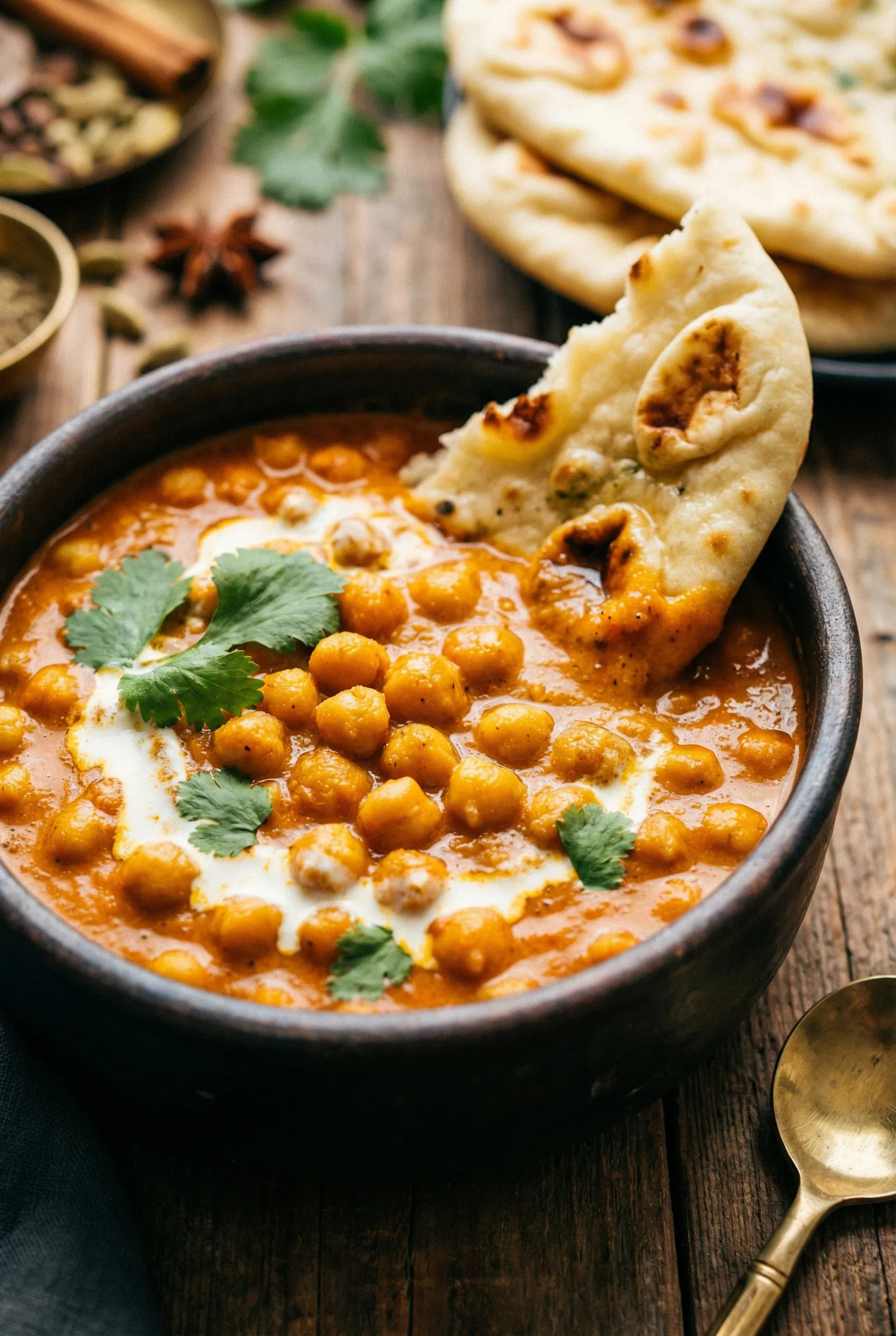
Serve over fluffy basmati rice or alongside warm naan bread. Garnish generously with fresh cilantro leaves and, if desired, a drizzle of coconut cream for presentation. Serve immediately while the sauce is hot and the chickpeas are tender.
Ingredient Substitutions
| Ingredient | Substitute | Notes |
|---|---|---|
| Chickpeas | White beans, cubed tofu, or paneer | White beans are creamier; press tofu for 15 min before cubing. Paneer makes it vegetarian but not vegan. |
| Coconut milk | Cashew cream or heavy cream | Cashew cream keeps it vegan. Heavy cream is richer but adds dairy. Avoid light coconut milk. |
| Crushed tomatoes | 2 large fresh tomatoes, blended | Fresh tomatoes are less acidic; you may not need the maple syrup. |
| Maple syrup | Coconut sugar, brown sugar, or agave | All work equally well. Use the same amount. |
| Fresh ginger | 1/2 teaspoon ground ginger | Fresh is far superior, but ground works in a pinch. |
| Baby spinach | Kale (stemmed and chopped) or Swiss chard | Kale needs 3 to 4 minutes to wilt; add it earlier than spinach. |
| Cayenne pepper | Red pepper flakes or Kashmiri chili powder | Kashmiri chili adds color with less heat — great for families with kids. |
| Naan bread | Roti, pita, or steamed rice | Any flatbread works. Rice makes it naturally gluten-free. |
Chef’s Tips
- Bloom your spices properly. This is the single most important technique in this recipe. Cooking the ground spices in oil for 45 to 60 seconds before adding liquid unlocks their full flavor potential. You should notice a dramatic shift in aroma — from raw and dusty to warm and toasty.
- Do not rush the onions. Softening the onions fully before adding garlic and ginger creates a silky sauce base. Undercooked onions will leave you with a grainy, harsh-tasting sauce.
- Add garam masala at the end. Unlike the other spices, garam masala is a finishing spice. Adding it off the heat preserves its delicate, complex aroma — think of it as the perfume of the dish.
- Taste and adjust constantly. Indian cooking is about balance. After simmering, taste the sauce. Too acidic? Add a pinch more sugar. Too rich? A squeeze of extra lemon. Not enough heat? A pinch of cayenne. You are the final seasoning.
- Let it rest for 5 minutes before serving. Like most stews and curries, this dish benefits from a brief rest off the heat. The sauce thickens slightly and the flavors settle into harmony.
- Day-two flavor is real. This tikka masala tastes even better the next day as the spices continue to develop overnight. Make it ahead for meal prep and thank yourself later.
Meal Prep & Storage
- Refrigerator storage: Transfer to an airtight container and refrigerate for up to 5 days. The flavors deepen with each day.
- Freezer storage: Freeze in portioned containers for up to 3 months. Let cool completely before freezing. Thaw overnight in the fridge before reheating.
- Reheating: Warm on the stovetop over medium-low heat with a splash of water or coconut milk to loosen the sauce. Microwave works but stir halfway through to ensure even heating.
- Batch cooking: This recipe doubles or triples easily. Use a large Dutch oven and increase the simmer time by 5 minutes to ensure the sauce reduces properly.
- Meal prep assembly: Store the tikka masala and rice separately to prevent the rice from absorbing all the sauce. Combine when reheating.
Pairing Suggestions
- Basmati rice and warm garlic naan: The classic pairing. The fluffy rice absorbs the sauce beautifully, while naan is perfect for scooping up every last drop.
- Cucumber raita: A cool, creamy cucumber raita (yogurt, grated cucumber, mint, cumin) balances the warmth of the spices. Use coconut yogurt for a vegan version.
- Roasted cauliflower with turmeric: Toss cauliflower florets with olive oil and turmeric, roast at 425°F (220°C) for 25 minutes. The nutty, caramelized florets complement the creamy chickpeas perfectly.
- Mango lassi or chai tea: A sweet mango lassi cools the palate between bites, while a hot masala chai ties into the same spice family and makes the meal feel complete.
Frequently Asked Questions
Can I make this in a slow cooker or Instant Pot? Absolutely. For a slow cooker, sauté the onions, garlic, ginger, and spices on the stovetop first (do not skip this step — blooming matters), then transfer everything to the slow cooker and cook on low for 6 to 8 hours or high for 3 to 4 hours. For an Instant Pot, use the sauté function for steps 1 and 2, then pressure cook on high for 8 minutes with a natural release.
Is this recipe actually vegan? Yes, as written this recipe is fully vegan. The creaminess comes from coconut milk, and there is no dairy, eggs, or animal products. Just double-check your naan if serving alongside — many store-bought naan breads contain yogurt or butter.
How do I make it spicier or milder? For more heat, increase the cayenne to 1 teaspoon or add 1 to 2 minced fresh green chilies (such as serrano) along with the garlic and ginger. For a milder version, reduce or omit the cayenne entirely and use sweet paprika instead of smoked. The dish will still be warmly spiced from the cumin, coriander, and garam masala without any significant heat.
Can I use dried chickpeas instead of canned? Yes. Soak 1 cup of dried chickpeas overnight (at least 8 hours) in plenty of water. Drain, then boil in fresh water for 45 to 60 minutes until tender but not mushy. This yields roughly the same amount as two 15-ounce cans. Dried chickpeas have a slightly firmer, nuttier texture that many people prefer.
Why does my sauce look separated or oily? This usually happens if the heat is too high when adding the coconut milk. Keep the heat at medium-low and stir frequently. If the sauce does break, blend about one-third of it in a blender or with an immersion blender and stir it back in — this emulsifies the fats and pulls the sauce back together.
What makes this different from chana masala? Chana masala is a drier, more tomato-forward preparation with a tangier spice profile (often including amchur or dried mango powder). Tikka masala features a richer, creamier sauce built on coconut milk or cream and tends to be milder and more aromatic. Both use chickpeas, but the flavor profiles and textures are quite distinct.